
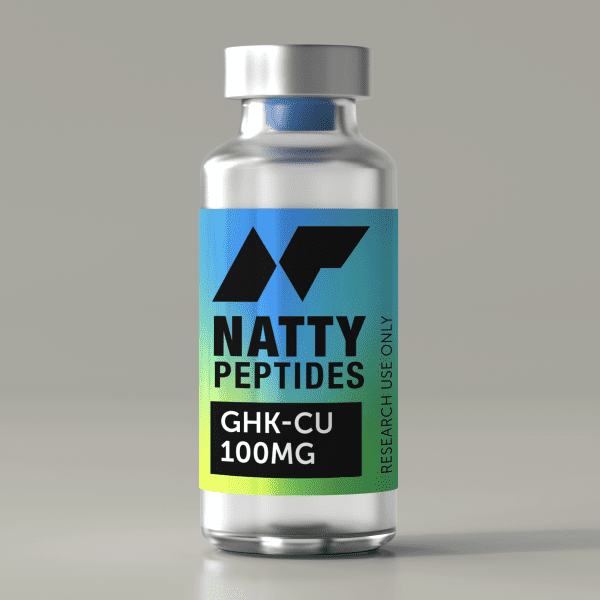
GHK-Cu (Copper Tripeptide / Glycyl-L-Histidyl-L-Lysine Copper Complex)100MG
$ 53.02
View GHK-Cu Certificate of Analysis Why Choose GHK-Cu (Copper Tripeptide / Glycyl-L-Histidyl-L-Lysine Copper Complex)? GHK-Cu is a naturally occurring copper-binding peptide composed of the amino acid sequence Glycyl-L-Histidyl-L-Lysine complexed with copper ions (Cu²⁺). It is one of the most extensively studied peptides in dermal remodeling, wound healing, and tissue regeneration research. Understanding its origins and distinct mechanisms provides important context for researchers. The History & Origins GHK-Cu was first isolated from human plasma in 1973 by Dr. Loren Pickart and colleagues . It was identified as a small tripeptide with the remarkable ability to promote the growth of liver cells in culture . Subsequent research revealed that GHK-Cu is a naturally occurring bioactive peptide present in human plasma, saliva, and urine, and its concentration in plasma decreases significantly with age—from approximately 200 ng/mL at age 20 to less than 80 ng/mL by age 60 . The critical insight came when researchers discovered that the peptide’s biological activity was dependent on its complexation with copper ions . GHK alone without copper is biologically inactive; the copper-bound form (GHK-Cu) is the active molecule responsible for its tissue remodeling properties . This discovery established GHK-Cu as a key regulator of cellular regeneration and a foundational tool in wound healing and skin research. The copper complex was first described in 1974 by Pickart and Thaler in the journal FEBS Letters . Since then, GHK-Cu has been the subject of over 100 research studies and clinical trials, and it has been used in skincare and wound care products for decades . How It Works: Distinct Mechanisms GHK-Cu operates through multiple biological pathways that make it valuable for tissue repair, collagen synthesis, and cellular regeneration research. Copper Delivery & Enzymatic Cofactor Function Copper ion delivery — GHK-Cu acts as a copper delivery system, transporting copper ions to tissues where they serve as essential cofactors for enzymatic processes critical to wound healing and collagen synthesis Copper-dependent enzymes — Copper is required for enzymes including lysyl oxidase (involved in collagen and elastin cross-linking), superoxide dismutase (an antioxidant enzyme), and cytochrome c oxidase (involved in cellular respiration) Collagen & Extracellular Matrix Remodeling Stimulates collagen synthesis — GHK-Cu has been shown to increase collagen production in dermal fibroblasts, enhancing the structural integrity of connective tissues Glycosaminoglycan stimulation — Promotes the production of glycosaminoglycans (GAGs), including hyaluronic acid, critical components of the extracellular matrix that contribute to tissue hydration and resilience Modulates matrix metalloproteinases (MMPs) — Regulates the balance between matrix synthesis and degradation, facilitating tissue remodeling and wound repair Antioxidant & Anti-Inflammatory Properties Reduces oxidative stress — Exhibits antioxidant properties, protecting cells from damage caused by reactive oxygen species (ROS) Anti-inflammatory effects — Modulates inflammatory responses, reducing pro-inflammatory cytokine production and promoting resolution pathways Protective effects — In dermal fibroblasts, GHK-Cu has been shown to alleviate UV-induced oxidative stress by increasing the expression of antioxidant enzymes including SOD-1, NQO1, and catalase Gene Expression Modulation Age-related gene expression — DNA microarray studies have shown that GHK-Cu can modulate gene expression, resetting the transcriptional profile of aged cells toward a more youthful state Tissue remodeling gene networks — Upregulates genes associated with tissue repair and extracellular matrix organization while downregulating genes associated with inflammation and cellular senescence CAS Number: 89030-95-5 (copper complex) or 49557-75-7 (GHK base) Molecular Formula: C₁₄H₂₂CuN₆O₄ Molecular Weight: 403.90 g/mol (copper complex) Purity: ≥98% (HPLC) Form: Lyophilised powder Quantity: 100mg per vial Laboratory research compound evaluated in controlled preclinical settings. Intended strictly for laboratory and educational research applications. For research use only. Restricted to in vitro laboratory experimentation and cannot be used in clinical or investigational studies, applied in any medical or therapeutic context, or distributed for purposes outside regulated laboratory research. This product is not a cosmetic. No claims are made regarding skin health, wound healing, hair growth, or copper biology.